 A screenshot of a computer Description automatically generated
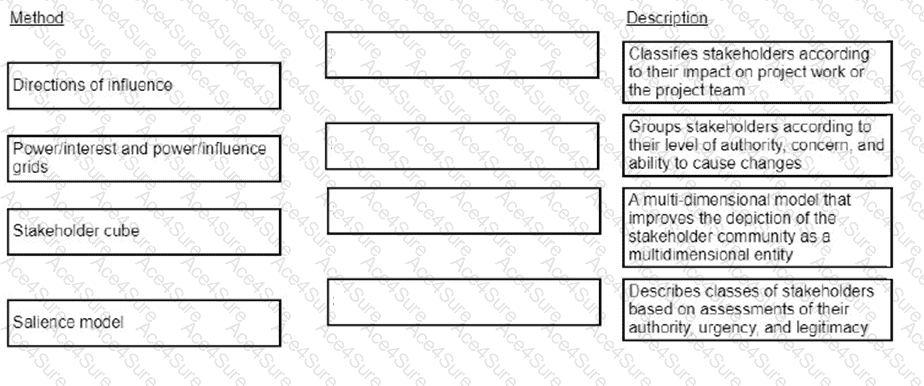
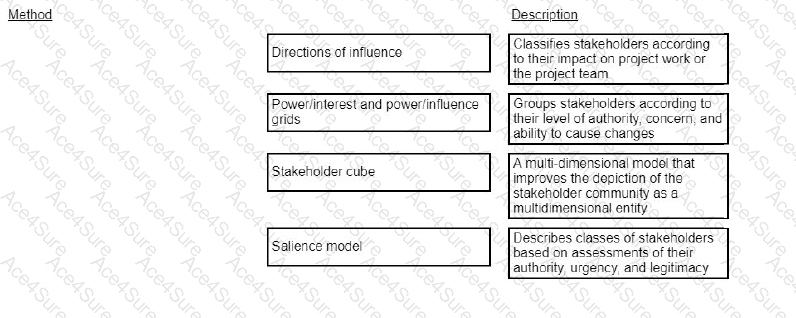
According to PMI standards, selecting the right categorization tool is vital for developing an effective Stakeholder Engagement Plan. Each model serves a different project complexity level:
Power/Interest Grid: This is the most common tool for small-to-medium projects. It helps the Project Manager determine which stakeholders need to be " Managed Closely " (High Power/High Interest) versus those who only need to be " Monitored " (Low Power/Low Interest).
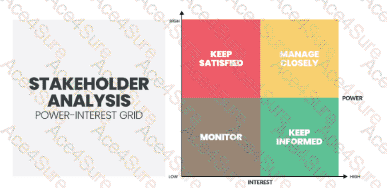
A vector illustration of the Stakeholder Analysis matrix is a step in Stakeholder Management for supporting analysis between power and interest grid for monitoring, satisfying, managing, informing
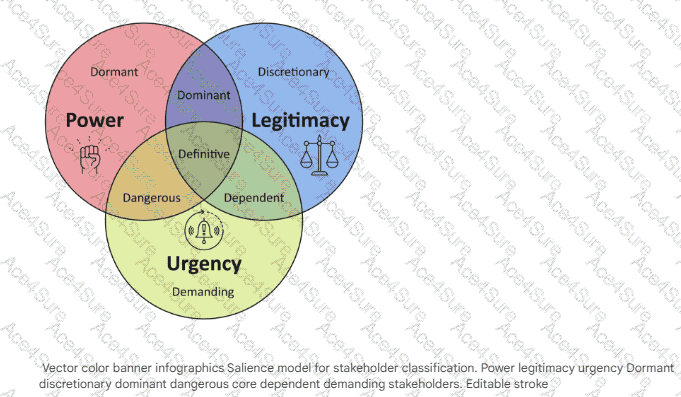
Salience Model: This model is particularly useful for large, complex stakeholder communities. It identifies " latent, " " expectant, " and " definitive " stakeholders. By assessing Legitimacy (their right to be involved) and Urgency (how much they need immediate attention), PMs can prioritize highly volatile or critical groups.
Stakeholder Cube: This is an evolution of the 2D grid. By adding a third dimension (such as Attitude or Influence), it provides a more nuanced view of the stakeholder landscape, helping to identify " Blockers " or " Champions " more accurately.
Directions of Influence: As discussed in previous questions, this focuses on the organizational " vector " of the stakeholder. It is highly effective for internal project communication planning, ensuring the Project Manager knows how to tailor messages for senior leadership (Upward) versus their own technical team (Downward).
The exam often asks which model to use in a specific scenario. Remember:
Simple/Small projects $\rightarrow$ Directions of Influence.
Standard mapping $\rightarrow$ Power/Interest Grid.
Complex/Large projects $\rightarrow$ Salience Model.