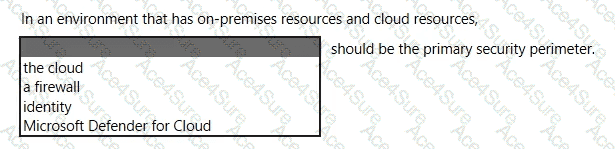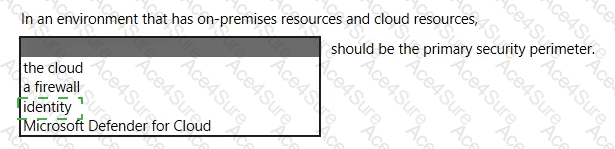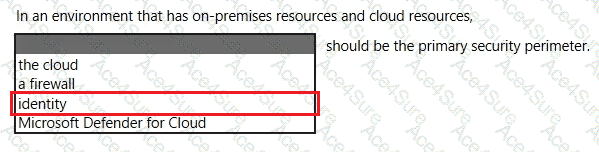
Microsoft’s security guidance for hybrid and cloud environments adopts the Zero Trust approach, which explicitly positions identity as the primary boundary for access decisions. Microsoft states that in modern, distributed environments, “the traditional network perimeter is no longer sufficient” and that identity becomes the new security perimeter for protecting access to resources across on-premises and cloud. In Zero Trust, access is granted based on who the user or workload is, the risk of the sign-in, the device health, and the context of the session. Microsoft summarizes this shift as: “Identity is the control plane,” emphasizing that authentication, authorization, and continuous evaluation of trust are enforced through identity-centric controls such as Conditional Access, multifactor authentication, Privileged Identity Management, device compliance, and session controls.
While tools like firewalls and services such as Microsoft Defender for Cloud remain important layers in a defense-in-depth strategy, they are not the primary perimeter in a hybrid model. Because users, devices, and applications operate from anywhere, identity is the consistent, verifiable layer through which policy is enforced for both on-premises and cloud resources. Therefore, in an environment that spans on-premises and cloud, Microsoft recommends treating identity as the primary security perimeter, applying continuous verification and least-privilege access through identity-driven policies.