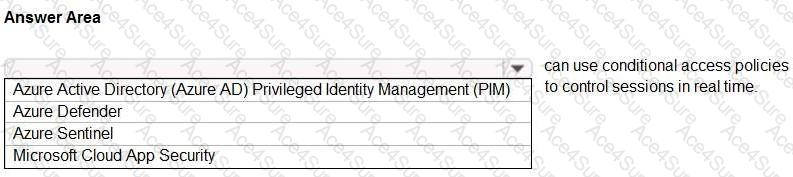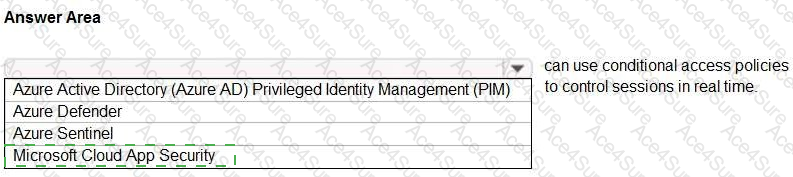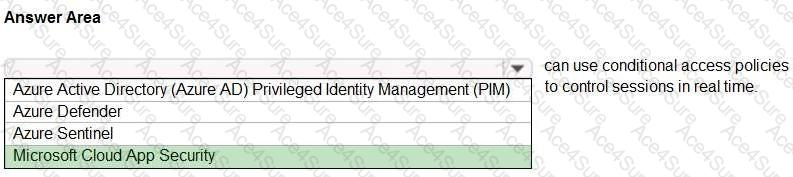
In Microsoft’s Security, Compliance, and Identity guidance, Microsoft Cloud App Security (now Microsoft Defender for Cloud Apps) integrates with Azure AD Conditional Access to provide Conditional Access App Control. This capability enables organizations to “monitor and control user sessions in real time” by routing traffic through a reverse proxy once a Conditional Access policy is triggered. With session controls, admins can enforce actions such as block, allow with inspection, apply download restrictions, require label application, or limit access to web apps based on context (user, device state, location, risk). SCI learning paths describe that Defender for Cloud Apps works with Conditional Access policies to provide session-based conditional access that “protects data in real time,” giving granular control after authentication while a session is active.
By comparison, Azure AD Privileged Identity Management (PIM) focuses on just-in-time elevation and governance of privileged roles, not real-time in-app session control. Azure Defender (Defender for Cloud) provides cloud workload protection and posture management, not Conditional Access session enforcement. Azure Sentinel (Microsoft Sentinel) is a SIEM/SOAR platform for analytics, hunting, and automation and does not apply Conditional Access session policies. Therefore, the Microsoft product that uses Conditional Access policies to control sessions in real time is Microsoft Cloud App Security (Defender for Cloud Apps).