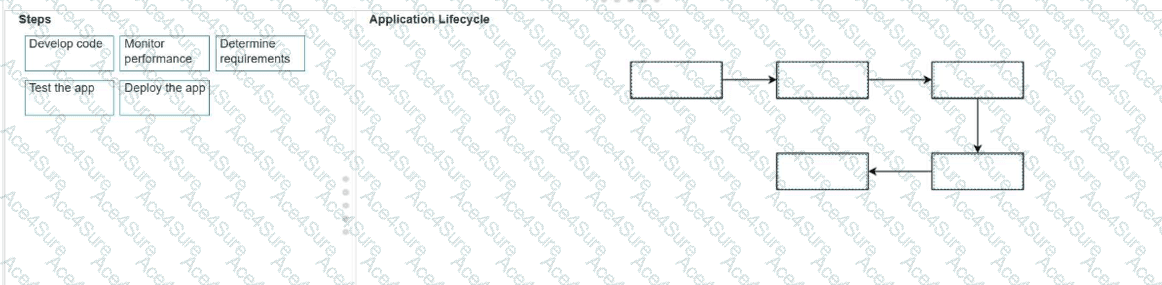
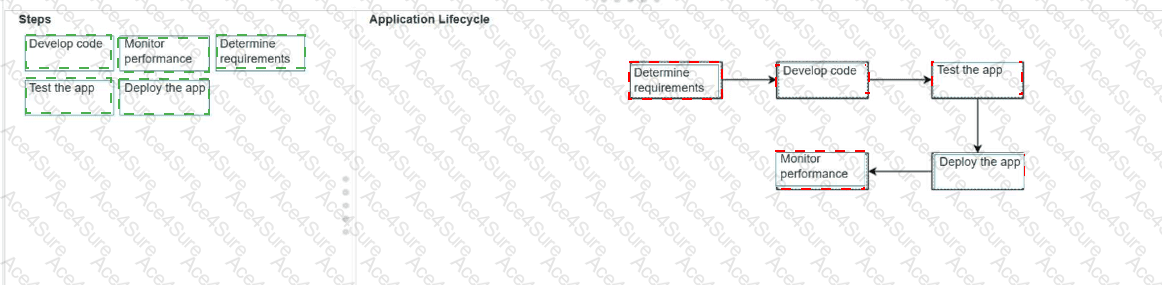
Determine requirements → Develop code → Test the app
↓
Monitor performance ← Deploy the app
The correct application lifecycle sequence begins with Determine requirements because the team must first define what the app must accomplish, who will use it, and which functional and technical expectations must be satisfied. Since the question states that the design is already provided, the next implementation step is Develop code, where the HTML, CSS, JavaScript, assets, APIs, and app logic are created according to the approved design and requirements. After development, the app must be validated through Test the app. Testing confirms that the app works correctly, meets requirements, handles user input properly, and does not contain functional defects that would block release. Once testing is complete, the app can be released through Deploy the app, which publishes it to the target environment or makes it available to users. The final operational stage is Monitor performance, where the released app is observed, maintained, updated, and improved based on performance, reliability, defects, and user behavior. References/topics: application lifecycle management, requirements, development, testing, deployment, maintenance.