Certificate application
Certificate issuing
Certificate storage
Certificate verification
Certificate usage
Certificate update
Certificate revocation
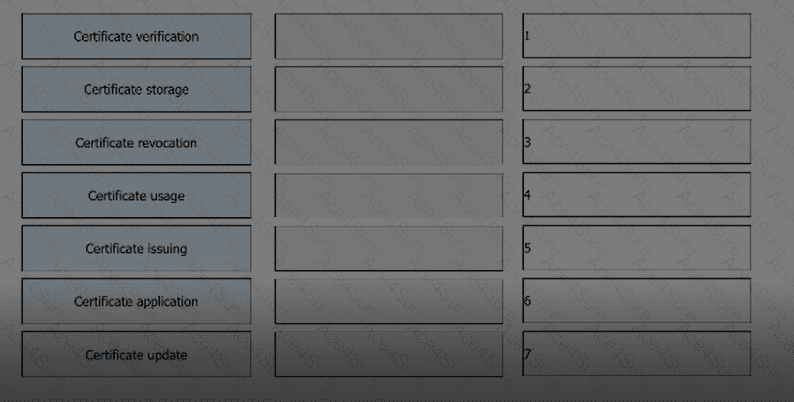
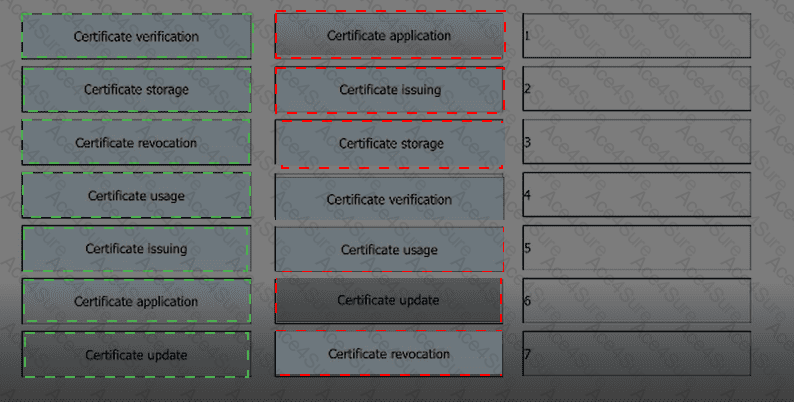
The PKI lifecycle describes the complete process a digital certificate goes through from creation to termination. The first stage is certificate application , where a user or device generates a key pair and submits a certificate request to the certification authority or registration authority.
After the request is approved, the CA performs certificate issuing , which involves creating and signing the certificate using the CA’s private key. Once issued, the certificate must be securely saved on the device, which is the certificate storage phase. Proper storage ensures that the certificate and the associated private key can be safely used when authentication or encryption is required.
Before using a certificate in communication, systems perform certificate verification . This step checks the certificate chain, validity period, and CA signature to confirm that the certificate is trustworthy. After successful verification, the certificate enters the certificate usage phase, where it is used for encryption, authentication, digital signatures, or secure communications such as HTTPS or IPsec.
During its lifetime, a certificate may require certificate update (renewal) when it approaches expiration. Finally, if the certificate becomes invalid or compromised, certificate revocation is performed to terminate its trust before its expiration date.