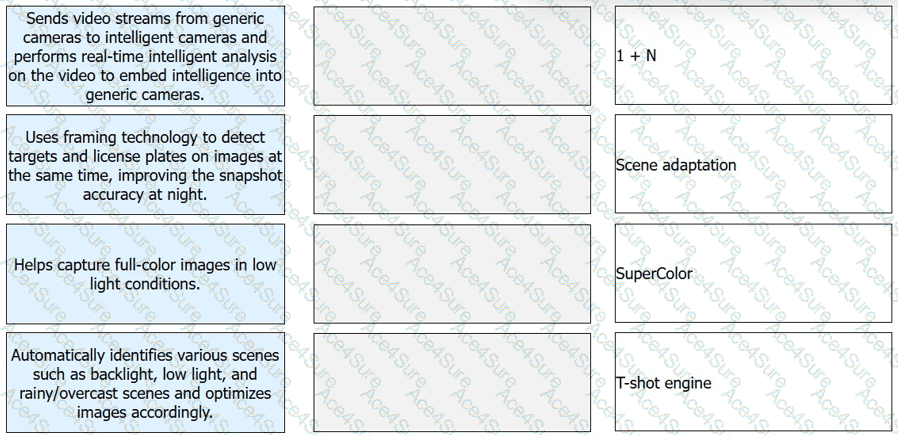
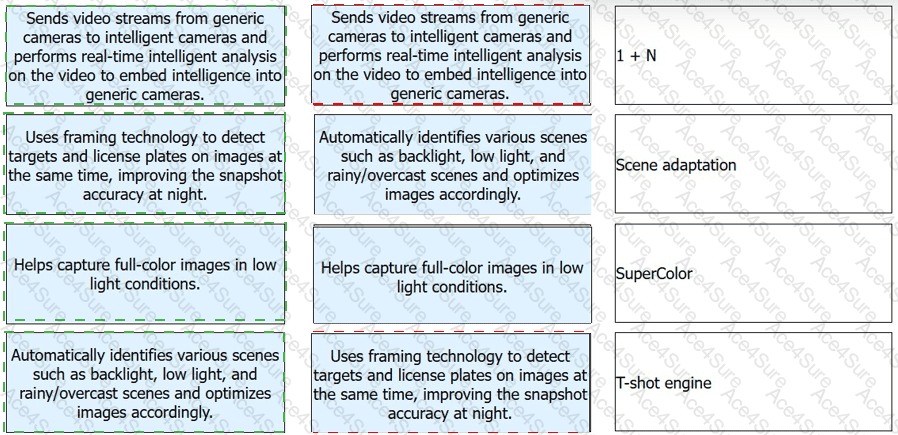
1 + N → Sends video streams from generic cameras to intelligent cameras and performs real-time intelligent analysis on the video to embed intelligence into generic cameras.
T-shot engine → Uses framing technology to detect targets and license plates on images at the same time, improving the snapshot accuracy at night.
SuperColor → Helps capture full-color images in low light conditions.
Scene adaptation → Automatically identifies various scenes such as backlight, low light, and rainy/overcast scenes and optimizes images accordingly.
The matching is determined directly from the intelligent camera feature definitions. The 1 + N function is the primary-secondary camera observation capability, where “a single intelligent camera can connect to N generic cameras on a live network, request streams from these cameras, and perform intelligent analysis on the streams”
so it matches the description about embedding intelligence into generic cameras.
The T-shot engine corresponds to the snapshot-related description because the material states that “M-Q and X-H series omni-data structuring cameras support T-Shot snapshot engine” and explains that “T-Shot, Huawei's patented exposure technology, enables optimal imaging of targets and vehicles at the same time” . That fits target and license plate capture in the same image.
Scene adaptation matches the description about identifying backlight, low light, and rainy or overcast scenes because the material states that AI chips “identify the weather and illumination conditions at different time points in the observation scenario, and then automatically adjust the image settings”
The remaining feature, SuperColor , therefore matches full-color imaging in low-light conditions.