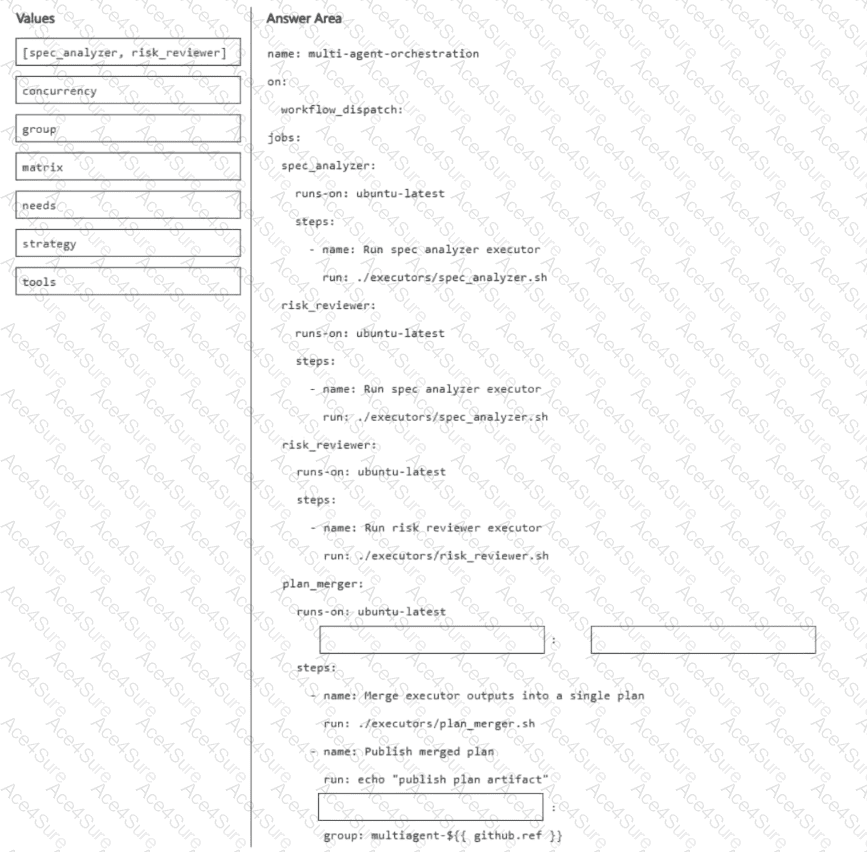
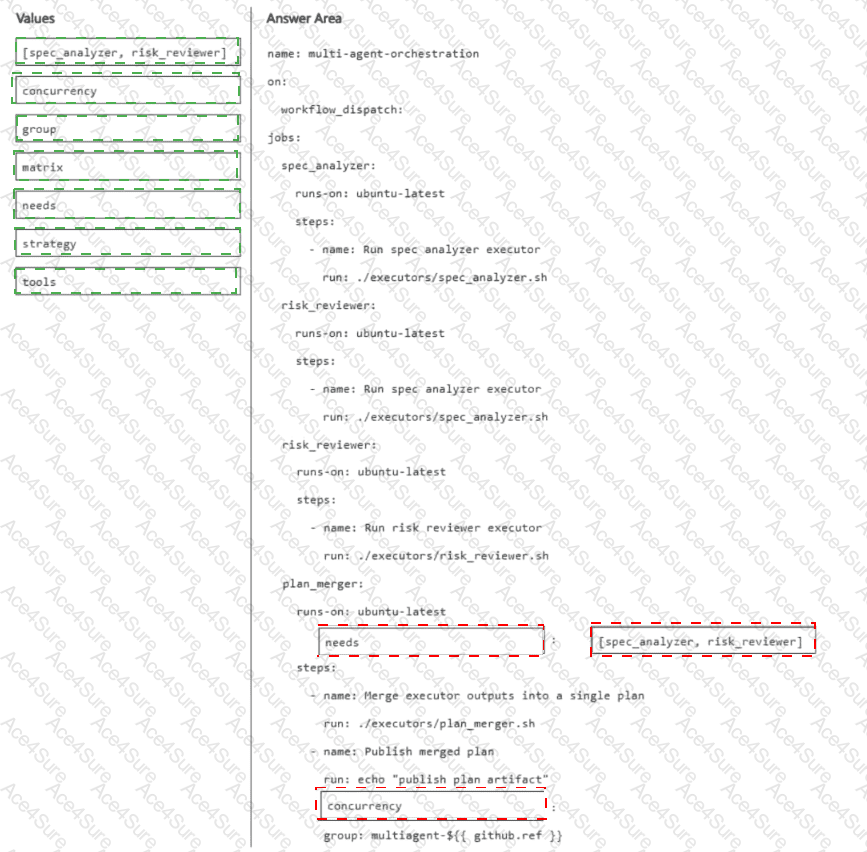
Target 1 → E. needs
Target 2 → A. [spec_analyzer, risk_reviewer]
Target 3 → B. concurrency
The relevant completed section is:
plan_merger:
runs-on: ubuntu-latest
needs: [spec_analyzer, risk_reviewer]
steps:
- name: Merge executor outputs into a single plan
run: ./executors/plan_merger.sh
- name: Publish merged plan
run: echo " publish plan artifact "
concurrency:
group: multiagent-${{ github.ref }}
The plan_merger job must use needs: [spec_analyzer, risk_reviewer] . GitHub Actions jobs run in parallel by default when no dependency exists. Therefore, spec_analyzer and risk_reviewer can execute concurrently, implementing the fan-out phase. The needs array then establishes the fan-in dependency: plan_merger does not start until both upstream jobs complete successfully. GitHub explicitly defines jobs. < job_id > .needs as the mechanism for declaring jobs that must complete before another job runs.
The final blank is concurrency , because the following line already defines group: multiagent-${{ github.ref }}. GitHub ' s concurrency key groups workflow jobs or runs under a shared key so that overlapping executions for the same reference can be controlled. This is separate from the parallelism of the two specialized analyzer jobs.
This architecture directly implements a multi-agent orchestration pattern: independent specialized executors operate concurrently, their outputs converge at a deterministic coordination point, and execution boundaries are managed explicitly. The GH-600 study guide specifically requires candidates to apply orchestration patterns, configure parallel agent execution, and detect or prevent conflicts among concurrently operating agents.
Study Guide Reference Topics: Orchestrate Multi-Agent Coordination; fan-out/fan-in orchestration; parallel execution; dependency management; agent isolation and conflict control.