The correct answer is B .
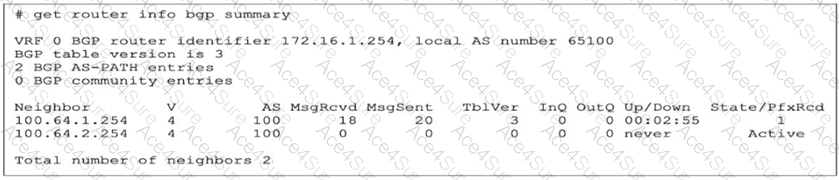
In the exhibit:
Neighbor 100.64.1.254 shows State/PfxRcd = 1 , which means the session is established and the local FortiGate has received 1 prefix
Neighbor 100.64.2.254 shows State/PfxRcd = Active
The study guide explains the BGP states exactly:
Connect : Waiting for a successful three-way TCP connection
Active : Unable to establish the TCP session
OpenSent : Waiting for an OPEN message from the peer
OpenConfirm : Waiting for the keepalive message from the peer
Established : Peers have successfully exchanged OPEN and keepalive messages
It also explains how to read the State/PfxRcd column:
“If the state is not established, this column displays the BGP state. If the state is established, this column displays the number of prefixes that the local FortiGate received from that neighbor.”
Therefore, because neighbor 100.64.2.254 is in Active state, the correct conclusion is that the BGP adjacency cannot form because the TCP session could not be established .
Why the other options are wrong:
A is wrong because BGP can establish adjacencies with multiple neighbors independently; one established neighbor does not block another
C is wrong because BGP adjacency is not established based on neighbor “priority”; the output shows adjacency is established because the session completed and prefixes were exchanged
D is wrong because having two neighbors in the same remote AS is valid in BGP and does not prevent adjacency formation
So the verified answer is: B .