
ServiceNow CIS-DF Question Answer
The CMDB Administrator has set up two Dynamic Reconciliation Rules within the ServiceNow Production Instance. The 'Server' class has a Dynamic
Reconciliation Rule of largest value for the RAM field. The 'Windows Server' class has a Dynamic Reconciliation Rule of most reported for the RAM field.
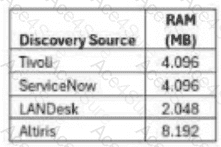
Given the above data inMultisource CMDB, which value is added to the CMDB forRAMfor aServer CI?
CIS-DF PDF/Engine
- Printable Format
- Value of Money
- 100% Pass Assurance
- Verified Answers
- Researched by Industry Experts
- Based on Real Exams Scenarios
- 100% Real Questions

Get 65% Discount on All Products,
Use Coupon: "ac4s65"
